UK–India FTA 2026: the buyer’s master guide to importing from India
Tariffs, rules of origin, proof of origin, customs, Indian export paperwork, UK import controls, freight routes, cargo insurance, import VAT and landed-cost calculations — connected in one practical buying guide.
The numbers worth knowing before the detail.
These are corridor-level facts. They are not a substitute for checking the live tariff line and origin rule for the exact goods you intend to buy.
UK–India CETA entered into force on 15 July 2026.
Treaty collection ↗UK imports from India £28.6bn; UK exports to India £19.3bn.
Official market data ↗Headline UK government coverage: duty-free access or tariff reductions across almost all Indian goods, subject to the exact schedule and origin rules.
UK deal overview ↗India removes or reduces tariffs on 90% of tariff lines; 64% are tariff-free at entry into force and 85% after staging.
Chapter 2 ↗“India origin” is not enough. An FTA saving exists only when the product code, tariff schedule, origin rule, proof and customs claim all line up.
That sentence is the organising principle for this entire guide. If one link is missing, a headline 0% rate can turn into ordinary duty, a delayed clearance or a post-entry customs problem.
Six gates before you call an Indian shipment “FTA eligible”.
The agreement can reduce duty. It does not remove the need to know exactly what the goods are, where they originate, how the claim is evidenced or whether the goods are legal to place on the UK market.
Identify the correct UK commodity code for the goods as imported — composition, processing, use and presentation can change the code.
Wrong code → wrong duty and controlsCheck the ordinary UK rate and the CETA preferential treatment for that exact line. Do not infer a rate from a neighbouring product.
Headline access ≠ product resultFind the product-specific rule in Annex 3A and test the actual supply chain, not just the address on the supplier’s invoice.
“Made in India” can be insufficientUse an accepted origin declaration, certificate of origin, or importer’s knowledge where appropriate and sufficiently evidenced.
Preference must be supportableFood, plant health, textiles, consumer products and other regulated goods keep their UK safety, labelling, notification and border requirements.
FTA is not a compliance waiverMake the customs entry with the right value, preference claim, origin basis and supporting data, then retain the records.
The importer owns the claim riskNever ask a supplier, “Is this product duty-free under the FTA?”
Ask for the proposed HS/commodity classification, the product-specific origin rule, the origin criterion they believe is satisfied, the evidence they can provide, and the commercial quotation on a named Incoterm. Then verify the UK-side treatment independently.
The agreement is a tariff and trade framework, not a border-free zone.
It matters commercially because many goods now have a lower duty route, customs procedures have stronger facilitation commitments, and the origin rules are written into one bilateral agreement. But ordinary import law did not disappear.
The UK–India Comprehensive Economic and Trade Agreement entered into force on 15 July 2026. On the UK side, government messaging describes 99% of Indian goods entering the UK as duty free or benefiting from tariff reductions. On the India side, 90% of tariff lines are being removed or reduced for UK goods; 64% are tariff-free immediately, with 85% becoming tariff-free after staging of up to ten years. Those figures are useful to understand the scale of the agreement, but they are not a shortcut to an individual product answer.
The UK deliberately protected some sensitive sectors. Government material identifies sugar, milled rice, pork, chicken and eggs among the areas excluded from tariff liberalisation. That alone is a useful warning against the phrase “everything from India is now zero duty”. The tariff schedule, the product code and the origin rule decide the shipment.
The economic scale is also substantial. UK government market data records £48.0 billion of total UK–India trade in 2025, made up of £28.6 billion of UK imports from India and £19.3 billion of UK exports to India. The government impact assessment models a long-run increase in bilateral trade of about £25.5 billion a year relative to a no-agreement baseline. It also models a significant increase in UK imports from India in textiles, apparel and leather. These are forecasts, not guaranteed sales, but they help explain why sourcing competition and buyer interest in the corridor may intensify.
Reduce customs duty and remove some trade friction.
It can make a qualifying Indian-origin product cheaper at the UK border, make repeated trade more predictable, and create a more structured origin-proof route.
Turn a weak supply chain into a compliant one.
It cannot fix the wrong commodity code, a failed pesticide test, an unsafe consumer product, a poor specification, a damaged cargo claim or an unclear customs value.
Duty may reduce. Import VAT, excise where applicable, port charges, inspections and other costs can remain.
Preferential origin is determined under Chapter 3 and the product-specific rule, not by the seller’s postal address.
HMRC says importers retain due-diligence responsibility even when they appoint an agent.
Under CIF the seller pays freight and insurance to destination, but risk passes when the goods are on board at shipment.
Start with the UK code, not with the product name on a sales brochure.
A tariff is applied to a classified product. Commercial names are useful for sales. Customs needs a legal classification.
The Harmonized System is the international backbone of tariff classification. India and the United Kingdom both build national tariff detail on top of it. In India you will hear HSN and ITC(HS). In the UK you will normally hear “commodity code” and “UK Trade Tariff”. The first six HS digits may align internationally, but the final national digits and measures can differ. That is why an Indian exporter’s ITC(HS) code should be treated as a clue, not copied blindly into a UK import declaration.
The right classification can depend on material, composition, processing, whether the product is whole or powdered, knitted or woven, packaged for retail or bulk, designed for a particular function, or combined with another material. A dehydrated spice, a spice preparation and a mixed seasoning may sit under different treatments. A cotton T-shirt and a textile article that looks similar in a photograph can fall under different headings if its construction differs. In customs work, detail is not bureaucracy for its own sake; detail determines money and controls.
Material, composition, processing, function, dimensions, packing and commercial presentation.
Use the live UK Trade Tariff and, where classification is difficult, consider professional or binding guidance.
Ordinary rate versus CETA preferential rate, including any staging or quota condition.
Licences, prohibitions, food/plant controls, VAT, excise and other conditions attached to the code.
The live UK Trade Tariff should be checked for the exact commodity code and import date. If the classification is commercially material or genuinely uncertain, do not solve it by choosing the code with the lower rate.
Open the UK Trade Tariff ↗Tariff staging in plain English
Some products become duty free immediately; others reduce over time. The agreement calls these tariff commitments and schedules. If a line is staged, the rate applicable in year one can differ from the rate in later years. A buyer comparing a 2026 shipment with a future sourcing programme should therefore separate “rate today” from “eventual FTA rate”.
For India-bound UK exports, the staging is especially important because the headline 90% liberalisation includes immediate cuts and reductions spread across up to ten years. For UK imports from India, access is much broader from entry into force, but sensitive UK sectors remain outside liberalisation. The safest discipline on either side is the same: product code → importing country schedule → origin rule → proof.
Send the product and HS code. Shelrock checks origin eligibility and quotes landed cost from verified Indian supply.
This is where a tariff saving becomes real — or disappears.
Rules of origin decide whether a product is genuinely UK or Indian for the purpose of the agreement. Shipping from India does not, by itself, create Indian preferential origin.
Chapter 3 sets out three broad ways a good can qualify. First, it may be wholly obtained — a concept particularly important for agricultural, mineral and naturally occurring goods. Second, it may be produced entirely from originating materials. Third, it may use non-originating materials but still qualify because the production in the UK or India satisfies the product-specific rule in Annex 3A.
Typical for goods whose origin is tied to where they are grown, harvested, mined, born or otherwise obtained under the treaty definition.
The final product is made entirely from materials that already have qualifying UK or Indian origin.
Non-originating inputs are allowed if the Annex 3A rule is met — for example a tariff-classification change, qualifying value content or a specified process.
The third route is where many manufactured products become more complicated. A garment can be cut, sewn and finished in India but still need to meet a particular textile origin rule. A food preparation can use ingredients from several countries and be subject to its own transformation or value rule. A metal product can have an entirely different rule. There is no universal “40% India content” formula that can safely be applied across all goods.
Product-specific rules: read the exact rule, including its notes
Annex 3A is the working document for manufactured goods. It can use expressions such as change in tariff heading, change in tariff subheading, wholly obtained, specific manufacturing operations or qualifying value content. If qualifying value content is used, the agreement contains methods for calculating it. If tariff classification change is used, the non-originating material must move from the disallowed classification into the required final classification through sufficient production.
Do not treat a supplier’s percentage statement as proof unless you know what the percentage represents. “70% local content” may be a procurement statement, not a CETA calculation. Ask for the rule being applied, the calculation method, the values used and the records that support them.
Cumulation: UK and Indian originating materials can work together
The agreement provides bilateral cumulation. In practical terms, qualifying material originating in one Party can be treated as originating when used in production in the other Party, subject to the Chapter 3 conditions. This can be commercially useful for supply chains that genuinely use UK and Indian originating inputs, but it still requires traceability. Cumulation is not permission to count a third-country material as originating simply because it was purchased through a UK or Indian distributor.
Tolerance is a safety valve, not a business model
Chapter 3 contains tolerance provisions that may allow limited non-originating material that would otherwise fail a tariff-classification rule. The percentage and treatment depend on the chapter/product context, and textiles have their own notes. Treat tolerance as a rule to verify, not as a standard percentage to apply to every SKU.
Minimal operations are deliberately restricted
Trade agreements are designed to stop simple routing or trivial processing from creating origin. Operations such as simple packing, labelling, washing, sorting, simple mixing or simple assembly may be insufficient where the treaty says they do not confer origin. If the supply chain story is “we import the finished product into India, change the box and ship it to Britain”, assume you have an origin problem until proven otherwise.
Where did the product acquire its origin?
For agricultural products the answer may be where the crop was grown. For manufacturing it may depend on the transformation in India. For a complex SKU, build the origin story backwards from the finished commodity code through the bill of materials and production steps.
Non-alteration matters when cargo transships
Modern India–UK sea freight may transship through a third country. That does not automatically destroy origin. But Chapter 3 contains non-alteration requirements, and customs can ask for evidence that the goods remained under appropriate customs control and were not improperly altered. Keep through bills of lading, routing records, warehouse/customs-control evidence where relevant, and any documents needed to explain a third-country stop.
For a UK importer, CETA gives three proof routes — with different evidence burdens.
The agreement is unusually useful here because it states the accepted routes clearly. The commercial choice should be based on who can evidence origin most reliably.
Origin declaration
Completed by the exporter or producer. It must follow the prescribed structure, be in English, identify the goods sufficiently and be supported by origin information.
Best when:The exporter/producer has strong origin records and can make the declaration correctly.Certificate of origin
Issued by an issuing authority. India exchanges the relevant issuing-authority details with HMRC under the agreement.
Best when:The transaction uses the issuing-authority route and the certificate can be matched cleanly to the shipment.Importer’s knowledge
The UK importer claims on the basis of its own documentation demonstrating that the goods are originating.
Best when:The buyer has a deep supplier relationship and sufficient origin evidence to carry the substantiation risk itself.For a UK importer, importer’s knowledge is powerful but should not be selected merely because it removes the need to wait for a certificate. If HMRC verifies the claim, the importer needs the documents. The treaty specifically provides for verification requests to the importer where the claim is based on importer’s knowledge.
A useful detail many buyers miss: retrospective claims
If preference was not claimed at import but the goods qualified at that time, Chapter 3 provides a route for a late claim and refund of excess duty, subject to the rules and evidence. A proof completed after import for this purpose needs the treaty wording for a retrospective completion and an explanation. This can matter when a buyer paid ordinary duty because the origin proof was not ready — but it should not become a routine substitute for preparing the shipment properly.
Another useful detail: minor errors do not automatically kill the claim
Chapter 3 says a proof should not be rejected merely for minor errors, discrepancies, omissions, typing errors or formatting issues if they do not create doubt about originating status. That is not permission for sloppy paperwork. It is protection against a technically harmless mistake. If customs considers the proof illegible or defective on its face, the agreement gives a 30-day period to provide a corrected copy.
Chapter 3 includes a UK proof-of-origin exemption where customs value does not exceed £1,000, or a higher amount the UK may specify, provided the relevant conditions are met. It cannot be used by splitting a commercial import into a series designed to evade the origin rules.
Read Chapter 3 ↗What the UK buyer actually has to do at the border.
This guide focuses on England, Scotland and Wales. Northern Ireland can involve different customs and regulatory treatment and may require an XI EORI.
For a commercial import into Great Britain, the UK buyer normally needs a GB EORI and a customs-declaration route. The declaration may be made by the business or by an appointed customs agent. If an agent is used, agree in writing whether representation is direct or indirect and what information the agent is authorised to use.
GB EORI, VAT position, customs agent if used, deferment or payment route, and any product-specific registrations.
Final UK commodity code and all measures attached to that code.
Invoice, currency, Incoterm, freight, insurance, additions/deductions and customs value.
CETA rate, origin criterion and accepted proof route connected to the exact goods.
Licences, IPAFFS, food/plant notifications, certificates, safety/labelling or other product controls where applicable.
Submit through the Customs Declaration Service with the correct values, procedure and supporting data.
Respond to documentary or physical checks, pay/secure sums due and obtain release.
Retain records, reconcile import VAT statements and correct an origin/customs error if later discovered.
Direct and indirect representation are not cosmetic labels
HMRC distinguishes between direct representation — where an agent acts in the importer’s name — and indirect representation, where the agent acts in its own name on the importer’s behalf and can become jointly and severally liable for customs debt. A non-UK-established importer importing into Great Britain can only ask someone to act indirectly in the circumstances described by HMRC guidance. The representation structure belongs in the onboarding conversation with the customs agent, not as an afterthought when the vessel arrives.
Customs value: the number duty is applied to
HMRC’s Method 1 transaction value is the first method an importer should test. It starts with the price actually paid or payable for the goods sold for import to the UK and then makes required adjustments. Transport, loading, handling and insurance up to the place of introduction into the UK are among the elements that can need to be included when they are not already inside the invoiced delivery term. Packing, assists, royalties or other additions can also matter in the right transaction.
This is why FOB, CIF and DDP quotations cannot be inserted into a landed-cost spreadsheet without understanding what is already inside the quoted price. Under a CIF invoice, freight and insurance to the named port are already included. Under FOB, the buyer usually needs to add the relevant freight and insurance to reach the customs value. Double-counting produces a wrong customs value; leaving costs out can understate it.
Import VAT: duty-free does not mean VAT-free
The import VAT value is based on the customs value even where the customs-duty rate is zero. HMRC then requires additions such as Customs Duty and relevant incidental expenses up to the first UK destination, plus a known further destination where applicable. The VAT rate is product-specific; many ordinary goods use the standard rate, but reduced or zero-rated categories exist.
If the buyer is VAT registered and meets the rules, postponed VAT accounting can be valuable for cash flow. It allows import VAT to be declared and, subject to the normal input-tax rules, recovered on the same VAT Return instead of paying it at the border and recovering it later. This changes cash timing; it does not make VAT disappear.
What happens on the India side before the UK ever sees the cargo.
UK buyers often hear Indian customs terms without knowing which are legal requirements, which are operational identifiers and which are simply industry language. Understanding the sequence makes supplier conversations much easier.
An Indian commercial exporter will normally operate with an Importer Exporter Code (IEC) and the registrations relevant to its business and product. The export customs filing moves through ICEGATE, India’s electronic customs gateway. A Customs Broker — still widely called a CHA, or Customs House Agent, in everyday Indian trade language — may prepare and lodge the export customs declaration and coordinate port/customs formalities.
Buyer specification, quantity, price, Incoterm, destination, payment terms and origin requirement are agreed.
IEC and product/business registrations are checked; bank/AD-code and port arrangements are put in place where relevant.
Goods are made or sourced, inspected/tested as required, packed, marked and matched to the commercial documents.
The exporter/producer establishes the CETA origin basis and uses the applicable origin declaration/certificate route.
The Indian export customs declaration is filed through the customs system, commonly by the exporter or Customs Broker.
Documentary, assessment, examination or other customs processes are completed as applicable; cargo enters the port/CFS/terminal flow.
Customs release for export is obtained and the container/cargo proceeds into the carrier movement.
Transport document, final invoice/packing list, origin proof and agreed quality/commercial documents are sent to the buyer/bank/agent as required.
India’s Press Information Bureau reported that the first CETA Certificates of Origin were issued through the eCoO 2.0 platform when the agreement entered into force. The operational point for a UK buyer is simple: do not wait until the container is at port to ask whether the origin evidence exists. Put the origin route into the purchase order and document checklist before dispatch.
CHA or Customs Broker?
Both terms will be heard. “CHA” is the legacy Customs House Agent expression and remains common in conversation. India’s current licensing framework uses “Customs Broker”. A British importer should not assume that an Indian CHA is the same legal concept as a UK customs agent. They perform similar practical functions around customs entries, but they sit inside different legal systems, authorisations and liability rules.
The same shipment is described in two different customs languages.
This crosswalk is intentionally practical. Several items are functional comparisons, not legal equivalents.
Legacy Indian term “Customs House Agent”; current formal Indian term is Customs Broker. Similar role, different legal regime.
IEC identifies Indian importers/exporters. GB EORI is the UK customs identifier. They are not the same registration.
India’s customs electronic gateway versus the UK’s Customs Declaration Service and related HMRC systems.
India’s main export customs declaration. The UK buyer does not file a Shipping Bill for a GB import.
Indian import-declaration term. GB imports use UK customs declarations, not an Indian Bill of Entry.
Both build on the Harmonized System, but national digit structures and measures differ.
Different tax systems. Do not convert one tax treatment into the other by analogy.
An India GST export mechanism; it is not a document the UK importer needs to reproduce.
Indian bank/customs-port operational identifier used in export processes.
Registration-cum-Membership Certificate linked to Indian export-promotion bodies for relevant purposes.
India’s digital certificate-of-origin ecosystem; the UK claim still follows CETA Chapter 3.
Inland Container Depot. Comparable operational idea, but not a one-to-one UK legal category.
Facility used for stuffing, destuffing, consolidation and port-linked cargo handling.
India’s food-safety authority does not have a single exact UK equivalent; UK responsibilities are split.
India’s Directorate General of Foreign Trade has no single UK institutional twin.
Broad functional comparison only; structures and powers are not identical.
If the Indian supplier says, “CHA will file Shipping Bill after AD Code registration,” you now know the UK translation.
They mean the Indian customs broker will handle the export customs declaration after the exporter’s port/banking setup is in place. None of that replaces your GB EORI, UK customs declaration or UK regulatory checks.
Tariff preference is one lane. Product regulation is another.
A shipment can be correctly originating under CETA and still be refused, held, recalled or commercially rejected because of product controls.
Check the exact product-country combination, contaminant controls, sampling/certificate requirements, pre-notification and border route before shipment. India has current GB controls on several spice/capsicum categories.
High-risk and medium-risk A/B plant goods can require phytosanitary certificates, IPAFFS notifications and checks. Risk categories can change.
Textiles sold in Great Britain must follow fibre-content labelling rules. Claims such as cotton content must be accurate.
UK importers, distributors and sellers have responsibilities to ensure consumer products are safe and meet applicable labelling/traceability requirements.
Indian spices are a perfect example of why “0% duty” is only half an answer
The Food Standards Agency’s current Great Britain restriction list includes Indian dried spices such as ginger, turmeric and other spices under specified contaminant-control regimes, and it lists capsicum products under particular controls. The list changes over time. For a spice importer, the commercially useful question is therefore not only “what is my CETA duty?” but “what is the current product-country control, what certificate/testing is required, what is the sampling frequency, and can my chosen border point handle the consignment?”
For fresh or plant-health-sensitive products, DEFRA/APHA guidance divides goods into risk categories. High-risk and medium-risk A goods can require importer registration, phytosanitary certification, IPAFFS pre-notification and documentary, identity or physical checks. Medium-risk B goods also have plant-health requirements. A low tariff does not reduce a plant-health risk category.
Textiles: commercial claims become compliance claims
If a bedsheet page says “100% cotton”, the physical product and label should support that statement. Great Britain textile rules require fibre content to be shown and deal with multi-component products. A buyer sourcing private-label apparel should treat fibre composition, care information, size specification, colourfastness, chemical requirements, traceability and packaging as part of the purchase specification rather than relying on a generic “export quality” promise.
The UK is one country, but the customs and regulatory treatment of goods moving to Northern Ireland can differ under the Windsor Framework. If the final destination is Northern Ireland, run a separate live check rather than applying this Great Britain workflow automatically.
The three questions every Incoterm must answer: who pays, who arranges, and when risk moves.
An Incoterm is not a price label. “FOB $20,000” and “CIF £22,500” are different allocations of cost and risk.
Can leave the overseas buyer with export-clearance complexity; often not the cleanest international buying term.
Works for containers and multimodal shipments; specify the exact named place.
Sea/inland-waterway term. Buyer arranges main freight and insurance; common for container trade but FCA may fit container handover more precisely.
Seller pays freight, but buyer carries transit risk after loading; insurance is not seller’s obligation.
Seller pays carriage/insurance but risk passes at shipment. Default insurance is limited cover under ICC(C), unless upgraded.
Any mode. Incoterms 2020 default insurance is broader ICC(A) or similar, unless otherwise agreed.
Buyer handles import clearance/duty/VAT unless contract allocates supporting work separately.
Looks simple to buyer but can be problematic if the Indian seller cannot lawfully/operationally act as UK importer or manage UK VAT/customs correctly.
For many UK buyers of Indian goods, FOB/FCA versus CIF/CIP is a genuine commercial decision. Buying FOB/FCA can give the buyer freight and insurance control and clearer visibility of logistics cost. Buying CIF/CIP can simplify the seller quotation but does not remove the buyer’s need to understand destination charges, customs value, risk transfer and insurance quality.
Seller pays to Southampton. Buyer assumes seller carries transit risk to Southampton. Wrong.
Under CIF, risk transfers when the goods are on board the vessel at the port of shipment. The seller then pays freight and arranges the required insurance to the named destination port. Cost destination and risk destination are not the same thing.
Choose the lane around cargo origin and total landed movement — not around a famous port name.
Freight rates and schedules can move weekly. The numbers below are dated market snapshots, not SHELROCK quotations.
A supplier in Gujarat may make Mundra commercially attractive. A factory around Mumbai/Maharashtra may favour Nhava Sheva. A Tamil Nadu textile factory may produce a better total cost through Chennai or Tuticorin than trucking across India to a western port for a lower ocean headline. Inland haulage, container availability, cut-off dates, port handling and transit reliability belong in the route decision.
Public FCL lane snapshot — 26 August 2026
Public table showed cheapest £4,819 / 43 days; fastest £5,159 / 35 days; highest £8,615 / 55 days.
Market source ↗Public table showed £5,282 at 36 days and £6,564 at 37 days in the dated snapshot.
Market source ↗Public table showed £4,819 at 47 days and £6,539 at 55 days in the dated snapshot.
Market source ↗They are third-party public snapshots and may represent particular carrier/service inclusions. A live quote must state origin charges, base ocean freight, surcharges, documentation, destination terminal charges, customs-clearance fees, free time, delivery, container type, weight limits, validity and exclusions.
The 12-line freight quote check
LCL versus FCL: compare cost per usable unit, not just freight
LCL is often attractive for trials because you buy only part of a container. But consolidated cargo is handled more times, the charge can be based on weight or cubic volume, and destination CFS/deconsolidation charges can surprise new buyers. FCL usually gives more control, lower handling frequency and better economics at volume, but it increases inventory commitment. For a low-value bulky product, cube can be more important than tonnes. For a dense product, payload and container weight can be the limiting factor.
Demurrage and detention deserve their own line in the risk model. Demurrage generally relates to the container/cargo occupying terminal space beyond free time; detention generally relates to keeping carrier equipment outside the terminal beyond free time. Contract definitions vary. A documentation delay that costs nothing in factory production can become expensive once the container clock is running.
Insurance is not a percentage you add at the end. It is a contract for specific risks.
The premium is small compared with the cargo value, but the wording decides whether a damaged or lost shipment becomes recoverable money.
Incoterms 2020 uses different default insurance levels under CIF and CIP. CIF, reserved for sea and inland-waterway transport, keeps Institute Cargo Clauses (C) as the default minimum. CIP requires the broader Institute Cargo Clauses (A) or similar cover unless the parties agree otherwise. Both typically use at least 110% of contract value for the insured amount under the Incoterms insurance obligation.
Broad “all risks” style cover subject to exclusions. It is not literally every imaginable risk.
Narrower named-perils style protection. Under CIF this can be the default unless the buyer negotiates more.
Often require specific clauses or extensions. Do not assume geopolitical disruption is automatically covered.
Poor or unsuitable packing can undermine a claim. Insurance cannot rescue a deliberately weak export pack.
Marine cargo cover commonly does not compensate ordinary market loss caused simply by delay.
Survey, photos, delivery notes, packing evidence, carrier notices and timing can decide the claim outcome.
Simple insurance planning calculation
For planning, if a contract value is £30,000 and the insured value is 110%, the insured amount is £33,000. If a hypothetical premium rate is 0.35%, the base premium would be £115.50 before taxes, fees or policy adjustments. That does not mean 0.35% is the market rate for your cargo; real pricing depends on commodity, packing, loss history, voyage, route, limits, deductibles and cover.
Ask for the policy wording or certificate — not “insurance included”.
Check the insured party, insured value, clauses, voyage, excess/deductible, exclusions, war/strike treatment, claims contact and whether you can claim directly. A one-line CIF quote tells you none of that.
Turn the treaty into a shipment-level planning view.
These tools are educational planning calculators. They do not determine classification, customs value, VAT treatment or legal origin.
Enter rates only after checking the exact UK commodity code and CETA treatment. A 0% field is not an assumption that your product qualifies.
The customs-value model is simplified. Real valuation can include or exclude additional items under HMRC rules. Import VAT may be recoverable or accounted for through PVA depending on the business and transaction.
This is arithmetic, not an insurance quote. Cover, exclusions, deductible, insurer, taxes and cargo/route risk must be confirmed with an insurer or broker.
Open the official commodity-code service.
Search by product description or paste a commodity code into the official UK service. Do not rely on a supplier’s Indian ITC(HS) code as the final UK classification.
How an FTA saving changes the numbers — without pretending the example is a tariff ruling.
The percentages below are deliberately illustrative. Replace them with the live rate for your commodity code.
Assume a UK buyer purchases goods from India for £25,000 on a basis that requires £2,500 of freight and £150 of insurance to be included in customs value. Ignoring any other valuation additions for the example, the customs value is £27,650.
Now imagine — purely for the calculation — that the ordinary duty rate is 8% and the verified CETA rate is 0%. Ordinary duty would be £2,212. CETA duty would be £0. The customs-duty saving is therefore £2,212 on that shipment. If the buyer repeats the same customs value twelve times in a year, the simple annual duty saving would be £26,544.
Import VAT also changes arithmetically because Customs Duty is normally part of the import VAT value. If the goods use the standard 20% VAT rate, removing £2,212 of duty reduces the VAT calculation by £442.40. For a fully taxable VAT-registered business able to recover that import VAT, the £442.40 is primarily a cash-flow/tax-accounting effect rather than the same kind of permanent saving as Customs Duty. That distinction matters when someone advertises an “FTA saving” that combines recoverable VAT with duty.
Plus import VAT calculated on the relevant VAT value.
Subject to exact classification, tariff schedule, origin and valid claim.
The commercial lesson is not “FTA saves 8%”.
The lesson is that the saving belongs to the exact tariff line. One SKU may have a high ordinary rate and a large preference saving; another may already be 0% under the UK Global Tariff, which means CETA creates little or no customs-duty saving even though origin is still relevant for any preference claim. A buyer should rank products by actual delta: ordinary duty minus verified CETA duty, then compare that saving with freight, quality, supplier and working-capital differences.
The shipment should be readable as one coherent story.
The invoice, packing list, origin proof, customs declaration, transport document and product evidence should describe the same goods. Mismatches create questions.
Specification, quantity, price, Incoterm + named place/port, delivery, payment, origin and document obligations.
Seller/buyer, goods, values, currency, delivery term, invoice reference and other required particulars.
Packages, net/gross weights, dimensions, marks, pallet/container detail and batch references.
Indian export customs declaration and associated customs release information.
Carrier transport record connecting shipper, consignee, cargo and routing.
The preference basis linked to the exact originating goods.
Product-specific evidence where required by buyer, regulation or risk control.
Only where applicable to the exact commodity and current UK control.
Where insurance is seller-arranged or buyer-arranged; verify cover and claimant rights.
Commodity code, customs value support, origin claim, agent instructions and release records.
Reconcile import VAT into the accounting records and VAT Return.
Delivery note, photos, survey, carrier notices and claim documents if cargo is short or damaged.
Ask for drafts before the vessel sails.
A typo is easier to correct before departure than after a customs query. Put a document cut-off into the shipment plan: draft invoice, draft packing list, origin proof route, transport instructions and any regulatory certificates reviewed before final dispatch.
The FTA increases the value of a supplier who can prove what they say.
A low price with weak origin, quality or document control is not a low landed cost. It is a contingent liability.
Can the actual factory repeatedly meet the written specification, tolerances, testing and packing?
PSR understanding, input origin records, production process and ability to support the chosen CETA proof route.
COA/test credibility, batch identity, inspection access, complaints process and change control.
Product-specific licences/certificates, labelling, traceability and destination-market awareness.
Named Incoterm/place, inclusions/exclusions, payment, validity, MOQ, lead time and tooling/development costs.
Real capacity for the SKU, raw-material availability, seasonality, backup production and repeat-order plan.
IEC/customs setup, broker/forwarder coordination, document timing, packing and port experience.
Legal entity, address, bank beneficiary, tax/export identifiers and fraud controls.
Speed matters less than accuracy, version control, escalation and written confirmation of changes.
Origin and FTA red flags
Put origin into the contract, not into a WhatsApp promise
Where tariff preference is commercially important, the purchase order should state that the supplier must provide information and documents needed to support the agreed origin route. It can require prompt notification if the origin status changes, cooperation with a customs verification, preservation of relevant records, and responsibility for false or unsupported statements according to the negotiated contract. This does not transfer the UK importer’s statutory responsibility to the supplier, but it gives the buyer a contractual mechanism to manage the upstream evidence risk.
Most failures happen in the hand-offs between tariff, supplier, freight and compliance.
The agreement itself is rarely the only problem. The operational gap is usually between teams.
1. The buyer uses the supplier’s HS code without UK verification.+
India’s ITC(HS) description points in the right direction but national codes and measures differ. Wrong classification can affect duty, preference, VAT, licences and border controls. Fix: classify from the UK product facts, then reconcile with the exporter’s code.
2. The supplier says “Indian origin” but cannot explain the PSR.+
Manufacturing in India is not automatically sufficient. Fix: identify Annex 3A rule, build the origin file, then choose the proof route.
3. Preference is claimed but the origin document is not connected to the imported goods.+
Descriptions, invoice numbers, SKU references or shipment records do not line up. Fix: review draft proof and commercial documents before departure.
4. Buyer saves duty and loses more money on destination charges.+
A low CIF or ocean rate hides terminal handling, deconsolidation, storage, demurrage, customs, delivery or inspection costs. Fix: compare an all-in landed-cost bridge, not quote headlines.
5. Food buyer assumes FTA overrides a higher-risk food control.+
Duty preference and sanitary controls are separate. Fix: check current FSA/DEFRA product-country measures every time a controlled product is quoted and again before shipment.
6. CIF insurance is treated as comprehensive cargo cover.+
CIF’s default cover is limited ICC(C). Fix: specify the cover you actually want, including war/strike where relevant, and review policy evidence.
7. The UK buyer tells the broker “do whatever is normal”.+
Representation, value, code, origin and procedure need informed instructions. Fix: provide written onboarding data and review the declaration logic for significant imports.
8. DDP is accepted without deciding who is importer of record.+
The commercial term does not magically give an overseas seller UK customs/VAT capability. Fix: map legal importer, EORI, VAT, representation and responsibility before accepting DDP.
9. Origin records exist, but only in one employee’s inbox.+
Chapter 3 verification can occur after import. Fix: create a shipment/origin evidence folder with retention controls, not an ad-hoc email trail.
10. The buyer treats PVA as a duty saving.+
PVA is a VAT accounting/cash-flow mechanism, not a customs-duty preference. Fix: separate permanent customs savings from recoverable-tax timing in the business case.
How to turn “the FTA looks interesting” into one controlled sourcing decision.
This is designed for a UK SME that wants to test India without building a large trade department first.
Define one product
Write the specification, annual demand, first order quantity, delivery city, required pack, quality standard and target landed cost. Do not start with twenty products.
Classify & check FTA
Confirm the UK commodity code, ordinary duty, CETA rate, product-specific origin rule and any regulatory measures. Record the sources and date checked.
Build the supplier brief
Include origin questions, documents, testing, Incoterm options and required quote format. Ask every supplier to quote the same basis.
Qualify 3–5 suppliers
Verify legal identity, actual factory/supply capability, origin evidence, quality controls, capacity, lead time and export execution.
Compare landed cost
Normalize FOB/FCA/CIF offers, get live freight, calculate customs value/duty/VAT, add destination costs and compare cost per usable unit.
Sample / evidence
Approve sample, test reports or technical documents appropriate to the product. Lock the final specification and packaging.
Customs & border plan
Appoint agent, confirm representation, EORI/VAT route, product controls, port, declaration data and origin-proof handling.
Contract & insurance
Lock Incoterm + named place, payment, quality acceptance, origin obligations, documents, inspection, cargo insurance and claim process.
Issue controlled PO
Release the order only when the commercial, origin, compliance and logistics files tell the same story.
Apply the FTA to the product you are actually buying.
The master guide explains the corridor. These guides connect classification, specification, supplier checks, landed cost and controls to individual India-origin buying categories.
Dehydrated Onion Powder
Open buyer guide ↗Food ingredientDehydrated Onion Flakes
Open buyer guide ↗SpiceDried Red Chilli
Open buyer guide ↗SpiceRed Chilli Powder
Open buyer guide ↗SpiceIndian Turmeric
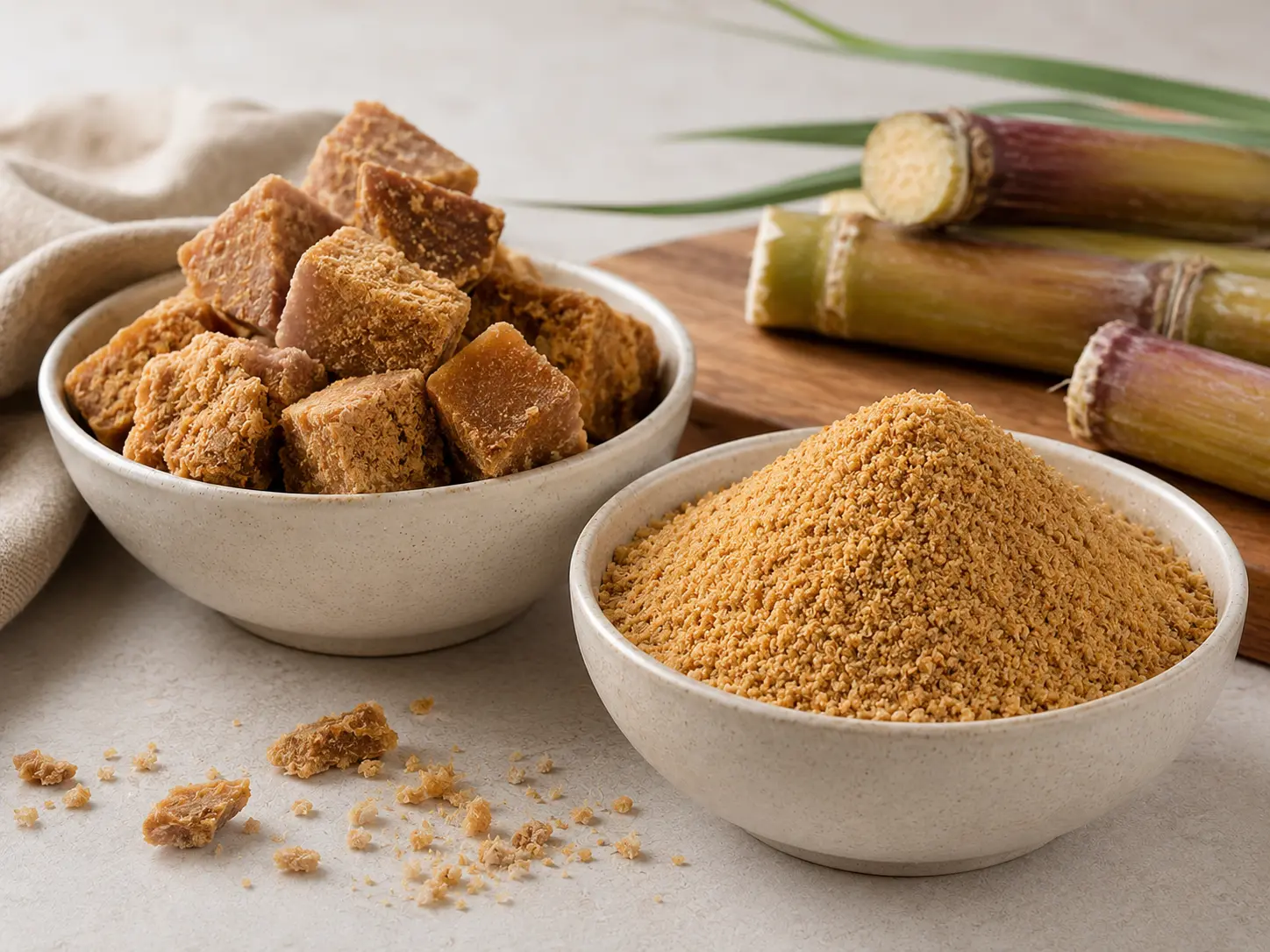
Open buyer guide ↗FoodIndian Jaggery
Open buyer guide ↗SpiceDried Ginger
Open buyer guide ↗IngredientFood-Grade Banana Powder
Open buyer guide ↗ApparelCotton Crew-Neck T-Shirts
Open buyer guide ↗ApparelMen’s Cotton Piqué Polo T-Shirts
Open buyer guide ↗Home textileCotton Bed Sheets
Open buyer guide ↗Home textileTufted Cushion & Pillow Covers
Open buyer guide ↗Home textileWhite Cotton Terry Hotel Towels
Open buyer guide ↗Home textileCotton Terry Kitchen & Tea Towels
Open buyer guide ↗One requirement. Verified supply, quotation, QC and shipment tracking in your dashboard.
Request a quote →SELLINGExport to the UK?List on Shelrock free, get a permanent Supplier ID and reach UK buyers.
Sell on Shelrock →Questions buyers actually ask once the headline ends.
Open the question you need. The answers are deliberately short; the main sections above contain the working detail.
Is the UK–India FTA actually in force now?+
Yes. The UK–India Comprehensive Economic and Trade Agreement, usually called the UK–India FTA or CETA, entered into force on 15 July 2026.
Does the UK–India FTA mean every product from India enters the UK at 0% duty?+
No. The headline access is broad, but the exact tariff treatment depends on the UK commodity code, the UK tariff schedule, any exclusion or staging rule, and whether the goods meet the agreement’s rules of origin. Some sensitive sectors are excluded from liberalisation.
What is the difference between the UK–India FTA and CETA?+
For this corridor they refer to the same trade agreement. UK government material uses both 'UK–India Free Trade Agreement' and the formal name 'Comprehensive Economic and Trade Agreement'.
What does 99% access for Indian goods really mean?+
UK government material says 99% of Indian goods entering the UK are duty free or benefit from tariff reductions under the agreement. That is a headline measure of tariff coverage, not permission to assume any individual shipment is automatically duty free.
Which products were excluded from UK tariff liberalisation?+
UK government material identifies sensitive sectors including sugar, milled rice, pork, chicken and eggs as excluded from liberalisation. Product-level treatment must still be checked in the live UK Trade Tariff.
What must a UK buyer check before claiming FTA preference?+
At minimum: the exact commodity code, the CETA tariff treatment for that code, the product-specific rule of origin, an accepted basis of proof of origin, and the accuracy of the customs declaration.
What are the three origin routes under the agreement?+
A good may qualify because it is wholly obtained, made entirely from originating materials, or produced using non-originating materials while meeting the applicable product-specific rule in Annex 3A.
What proof of origin can a UK importer use for goods from India?+
For UK imports, the agreement allows an origin declaration completed by the exporter or producer, a certificate of origin issued by an issuing authority, or importer’s knowledge supported by sufficient documentation.
How long is an origin declaration or certificate of origin valid?+
The agreement provides a 12-month validity period from completion of an origin declaration or issue of a certificate of origin, unless the importing Party’s law provides a longer period.
Can one proof of origin cover repeated shipments?+
For imports into the United Kingdom, an origin declaration or certificate of origin may cover multiple shipments of identical goods for a stated period not exceeding 12 months, subject to the agreement and the customs treatment of the actual imports.
Can I claim preference after the goods have already been imported?+
The agreement permits late claims and refunds where the goods qualified at import. A late claim can be made no later than one year after import unless the importing Party provides a longer period.
How long should origin records be kept?+
The agreement requires an importer claiming preference to keep relevant records for at least four years from import. Exporters and producers must keep origin records for five years from issue or completion of the proof, subject to any longer national requirement.
Is there a low-value proof-of-origin exemption for UK imports?+
The agreement provides a UK exemption where the customs value does not exceed £1,000, or a higher amount the UK may specify, provided the declaration requirements are met and the import is not structured to evade the rules.
Does a 'Made in India' label prove CETA origin?+
No. Country-of-origin marketing, manufacturing location and preferential origin are related but not interchangeable concepts. The product must meet the rule of origin for its tariff classification and the claim must be supportable.
Does the FTA remove UK food-safety checks?+
No. Tariff preference and regulatory compliance are separate. Food, plant, animal, product-safety and labelling requirements continue to apply.
Do Indian spices face special UK import controls?+
Some Indian food categories are subject to current Great Britain controls. The FSA list includes several Indian spices and capsicum products under specific contaminant-control measures. The exact product-country entry should be checked before shipment.
Do textiles from India need UK fibre labels?+
Textile products sold in Great Britain are subject to fibre-content labelling rules. The FTA can change customs duty, but it does not replace the product’s labelling or safety obligations.
What is a CHA in India?+
CHA means Customs House Agent, a legacy and still-common trade term. The current formal Indian regulatory term is Customs Broker. In the UK, businesses usually say customs agent or customs broker; the legal representation rules are different.
Is an Indian IEC the same as a UK EORI?+
No. They play different roles. India’s Importer Exporter Code identifies importers and exporters in the Indian trade system, while a GB EORI is the customs identifier normally required for businesses importing into or exporting from Great Britain.
What is ICEGATE?+
ICEGATE is India’s national electronic customs gateway used for customs filing and related services. In Great Britain, customs declarations are handled through HMRC’s Customs Declaration Service rather than an ICEGATE equivalent.
What is a Shipping Bill?+
In India, a Shipping Bill is the main export customs declaration. A UK buyer may hear this term from the exporter or customs broker. The UK-side import declaration is a different customs record.
What is a Bill of Entry?+
A Bill of Entry is an Indian import customs declaration. It is not the document a UK importer files for goods entering Great Britain; UK imports use the UK customs declaration system.
What is the difference between HSN, ITC(HS) and a UK commodity code?+
They are all built on the international Harmonized System, but national tariff nomenclatures add more detailed digits and national measures. Never copy an Indian ITC(HS) code into a UK declaration without checking the UK Trade Tariff.
Do I need a customs agent in the UK?+
You can make declarations yourself if you are set up and competent to do so, but many importers appoint a customs agent. HMRC makes clear that appointing an agent does not remove the importer’s due-diligence responsibility.
What is direct versus indirect customs representation in the UK?+
A direct representative acts in the importer’s name; an indirect representative acts in their own name on the importer’s behalf and can be jointly and severally liable for customs debt. The correct arrangement depends on the importer’s establishment and circumstances.
How is UK customs value calculated?+
Method 1 starts with the transaction value and adds relevant items such as transport, loading, handling and insurance up to the UK border where they are not already included. Other valuation adjustments may also apply.
Is import VAT calculated only on the supplier invoice?+
No. The import VAT value starts from the customs value and generally adds duty and incidental expenses to the first UK destination, and to a known further destination where applicable, before applying the VAT rate.
Can a VAT-registered UK business postpone import VAT?+
Eligible VAT-registered businesses may use postponed VAT accounting so import VAT is declared and, subject to normal recovery rules, recovered on the same VAT Return instead of being paid upfront.
What does CIF insurance actually cover?+
Under Incoterms 2020, CIF requires the seller to obtain the default minimum Institute Cargo Clauses (C) level unless the parties agree more. Risk nevertheless passes when the goods are on board the vessel at the port of shipment.
What is the difference between CIF and CIP insurance?+
CIF is for sea and inland-waterway transport and defaults to Institute Cargo Clauses (C). CIP can be used for any mode and under Incoterms 2020 requires the broader Institute Cargo Clauses (A) or similar cover unless the parties agree otherwise.
Why does cargo insurance often use 110% of contract value?+
Incoterms 2020 CIF and CIP insurance obligations use at least the contract price plus 10%, commonly expressed as 110%. The actual premium is then based on the insured value and the insurer’s rate and policy terms.
What is the best India-to-UK port route?+
There is no universal best route. Western India cargo often moves through Mundra or Nhava Sheva/JNPT; southern cargo may use Chennai, Cochin or VOC/Tuticorin. UK choices include Felixstowe, London Gateway and Southampton. Compare the current sailing, transshipment, total charges and inland delivery rather than port-to-port freight alone.
How much does a container from India to the UK cost?+
Freight changes constantly. Public lane data on 26 August 2026 showed 40-foot or 40HC examples broadly in the high-£4,000s to mid-£6,000s on selected India–UK lanes, with higher offers also visible. These are market snapshots, not an all-in quotation.
What is the difference between FCL and LCL?+
FCL means a full container load booked for one shipper’s cargo. LCL means less-than-container-load cargo consolidated with other shipments. LCL can suit smaller quantities but often carries more handling and destination-charge complexity.
Does a lower FTA duty always mean a lower landed cost?+
No. Freight, destination handling, inspections, testing, storage, demurrage, inland delivery, financing, exchange rates and product losses can outweigh the customs-duty saving.
Can SHELROCK calculate my exact duty and landed cost?+
SHELROCK can structure a planning calculation and sourcing brief, but the final customs treatment must be based on the live UK Trade Tariff, the exact product classification, origin evidence and the actual shipment figures.
What should I send to get a serious India sourcing quote?+
Send the product description, specification, quantity, packing, destination, target delivery, required testing or certifications, preferred Incoterm and any FTA-origin requirement. A complete brief produces a more comparable commercial response.
Primary sources first. Market-rate snapshots labelled separately.
Core legal, customs, origin, food, plant, textile and VAT statements were checked against current official sources on 29 August 2026. Freight figures are dated third-party market snapshots and should be refreshed before a live shipment.
How SHELROCK separates a fact from a commercial interpretation.
Official treaty text and government guidance establish the legal or regulatory baseline. The buyer frameworks, workflow diagrams, scorecards and calculators then translate that baseline into procurement decisions. Where a number is hypothetical, illustrative or from a third-party freight market source, it is labelled as such. No calculator on this page creates a customs ruling, insurance quotation or origin determination.
The exact commodity code, tariff treatment, origin qualification, customs valuation, VAT treatment, food/plant controls, product rules, freight and insurance depend on the goods, transaction, date, destination and evidence. Verify the live UK Trade Tariff and relevant authority requirements before making a declaration or shipment decision. Northern Ireland should be checked separately where applicable.